Equality, Diversity & Inclusion (EDI)
ACCESS

On EDI & Access - Ethical Creatives is guided by those of us in the group alongside:
1. The UNCRPD - Article 30 of the United Nations Convention on the Rights of Persons with Disabilities (Divergence)
2. The 5As: Anticipate, Ask, Assess, Adjust, Advocate - as outlined below by the *BBC
3. The ICCPR - Article 18 of the International Covenant on Civil and Political Rights
The Ethical Creatives Group was founded by and is exclusively made up of individuals across the wide and varied spectrum of divergency. Some of us choose to disclose our divergence. Some of us may not. Some of us may view our differences as disabilities. Some of us may not.
It is ALWAYS the Individual's choice as to how they identify.
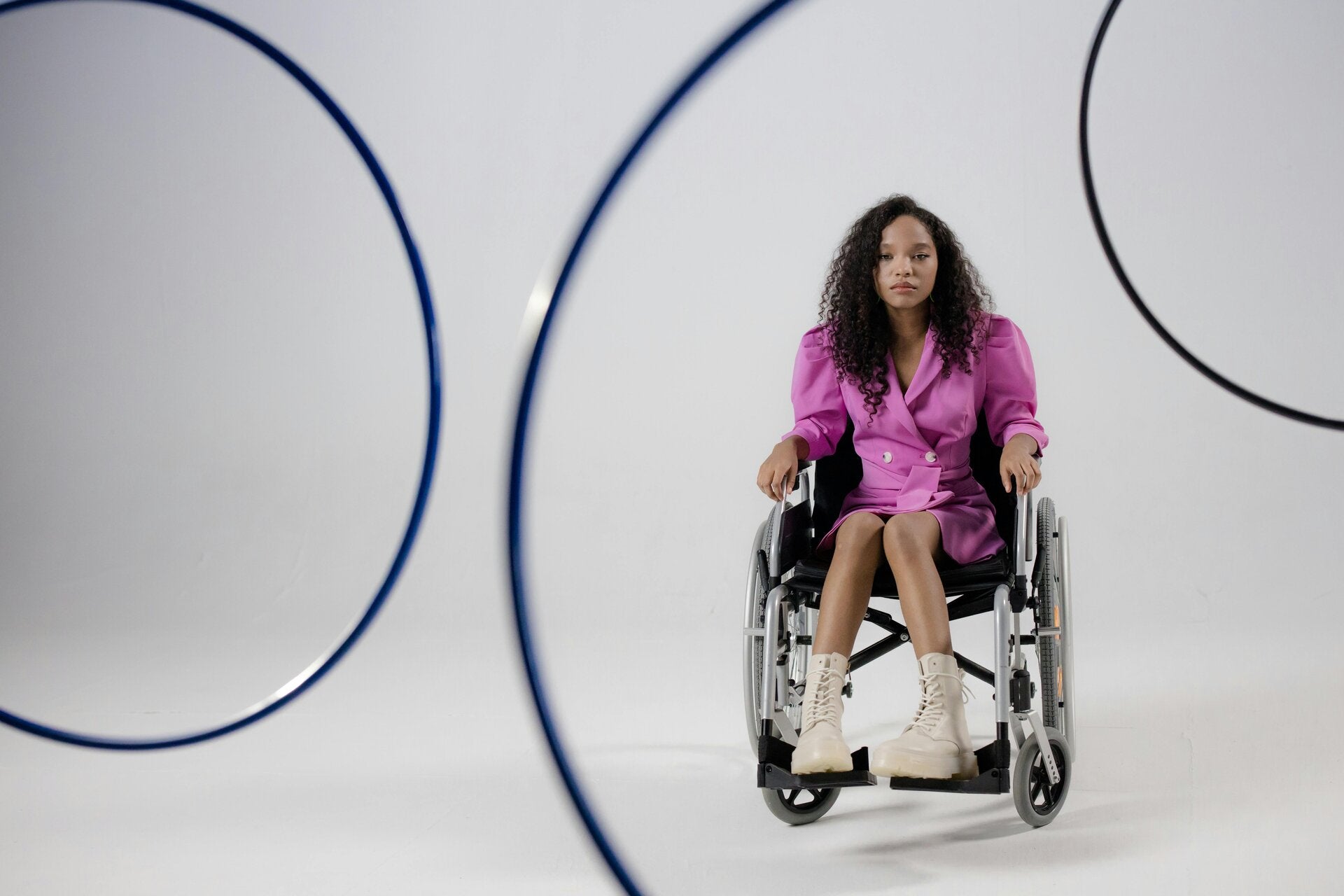

1. The UNCRPD
Article 30 of the United Nations Convention on the Rights of Persons with Disabilities (Differences) focuses on the right of persons with disabilities to participate equally in cultural life, recreation, leisure, and sport. States that have ratified the convention are required to take appropriate measures to ensure accessibility and inclusion in these areas.
Key aspects of Article 30 for Ethical Creatives include:
- Ensuring access to cultural materials in accessible formats and access to cultural venues like theatres, museums, cinemas, and libraries.
- Supporting the development and use of the creative, artistic, and intellectual potential of persons with disabilities.
- Addressing intellectual property laws to avoid discriminatory barriers to accessing cultural materials.
- Recognizing and supporting the cultural and linguistic identity of persons with disabilities, including sign languages and deaf culture.


2. The 5As
As Outlined by the *British Broadcasting Corporation
1. Anticipate
We fully expect to work, and continue to work, with disabled people on a regular basis. So we will keep ahead of the game and ensure our structures, processes and environments are - and remain - inclusive. We will engender confidence among disabled talent by actively communicating and demonstrating how we are inclusive. In doing this we will always seek expert advice and stay up to date with best practice.
2. Ask
We avoid assuming anything, of anybody. So, sensitively, and as standard, we will regularly approach every team member - whether they have a condition or impairment that is immediately apparent or not - to invite them to discuss any adjustment needs or access requirements they have in order to fulfil their role. In doing so we will focus on access and adjustments, not conditions or impairments and we will let disabled people own those conversations.
3. Assess
We value self-reflection. So we will be clear and transparent about how accessible we are, ensuring that disabled talent can easily find out about our access provision and support, without having to ask. We will consistently sense-check that we have created a working culture where everyone feels open, confident and safe to communicate their access needs, bringing in specialist expertise when needed. We will also regularly evaluate and improve our inclusion policies and practices.
4. Adjust
We deliver what is needed. So we will consistently, and well ahead of time, put in place any and every reasonable adjustment to ensure the full inclusion as well as the physical and emotional wellbeing of disabled talent - before, during and after their involvement with us. We will do so with the support of relevant experts and ensuring we have sufficient funding in place.
5. Advocate
We set high standards for everyone. So we will celebrate what disabled talent bring, and actively champion them. We will not tolerate any inappropriate behaviour, language or attitudes and we will think long-term to consistently support the progression of disabled talent into senior roles.
These standards are deliberately not detailed tips or technical instructions, as these can change over time and it would be impossible to provide a definitive list of every access requirement, reasonable adjustment or best practice approach in every circumstance for every individual or production.
However, guidance has been provided below about how the standards should be put into practice.
Guidance for putting the standards into practice
Anticipate
- Think 'access first': be proactively inclusive and accessible, rather than reactively so.
- Have dedicated inclusion policies and processes around recruitment, onboarding, budgets and funding and schedules - time and money should never be a reason for disabled talent to be excluded.
- Recognise that accessibility comes in multiple forms: physical spaces, communication methods, equipment and technology and working practices across all parts of the production cycle need to all be fully inclusive to talent with a range of lived experiences of disability.
- Deliberately seek out ways to consistently meet, hire, include and progress disabled talent, including those you have never worked with before.
- Work collaboratively and regularly with skilled professionals, specialist organisations and other relevant groups. This will usually mean people with both lived experience of disability and a professional background and/or training in the field of disability inclusion.
- Regularly attend training provided by trusted and reputable suppliers with lived experience of disability.
- Ensure you understand the legal frameworks such as the Equality Act 2010, which you must operate within, and the funding support that is available, including Access to Work.
- Actively demonstrate how you are inclusive, including using language and making references which signal you understand what is involved in working with and fully including disabled talent.
Ask
- Ensure accessible recruitment and casting processes, consistently offering adjustments and support in order for disabled talent to fully and equally access the process.
- Never ask unnecessarily for details about a person’s conditions or impairments and under no circumstances during the hiring process, where the entire focus will be on talent, skills, knowledge and experience.
- Seek to understand the needs, requirements and preferences of all disabled talent on an individual basis, remembering that conditions often fluctuate and evolve, as do a person’s feelings about and understanding of their condition.
- Consider using Access/Disability Passports, documents which support access and adjustment conversations with line managers and which can travel with disabled talent across different employers to ensure they are consistently supported across their career.
- Regularly check-in with disabled talent to ensure that any adjustments and access support discussed and provided are still fit for purpose.
- Put disability inclusion on the agenda – literally, discussing disability inclusion at every stage of the production process, from development to delivery, and at every key meeting and milestone.
- Regularly report and track disability inclusion, confidentially and within legal parameters, through industry tools such as Diamond and as part of your own company data collection.
- Respect confidentiality, keeping all personal information secure and only sharing it with anyone who needs to know, and with the talent’s knowledge and express permission: no information regarding a person’s impairment or condition is ever public property.
- Bring in expertise when needed, in particular working with Access Co-ordinators early at the initial stages of commissioning, crewing up and casting, to provide advice and support and to ensure that physical, social, communication and cultural barriers are removed.
Assess
- Produce and keep updated an accurate access statement which covers your current physical environments, communication methods, working patterns and practices, and levels of disability knowledge and understanding.
- Clearly communicate these on your website and in other corporate material and refer to it in your job adverts and posts.
- Ask for feedback from disabled talent regarding their experience to identify any potential barriers and areas of improvement for the welfare and inclusion of talent.
- In particular, consider ways to adjust schedules and spaces to allow disabled talent (and everyone else) to perform at their best.
Adjust
- Ensure all adjustments and access is set up and functioning before disabled talent begin their role.
- Have contingency plans and/or back-up resources in place should the original access provision fall through.
- Get funding secured in advance – whether from Access to Work, from within your budgets or from a third-party fund.
- Be open to doing things differently, providing the option for disabled talent to carry out their role in more than one way, according to what best suits them, and with an emphasis on outcomes rather than processes.
- Value flexibility as a tool which not only supports the inclusion of disabled talent - including through remote working, flexible hours and job shares - but also fuels the creative processes.
- Appoint a trust point of contact for disabled talent, known as an Access Contact, who is embedded within the team (in the same ways as Safeguarding Officers are existing team members) and with whom disabled talent can liaise if they have any questions, concerns or observations.
- Work with trained Access Co-ordinators who can assess access needs, oversee the implementation of access plans and adjustment agreements, and ensure best practice is consistently followed.
- adjust for everything, remembering disabled talent have access needs not only in their day jobs, but in every part of their professional lives - from training courses and employment requirements such as appraisals, to company announcements and wrap parties or networking events.
Advocate
- Regularly make your expectations clear for everybody in the team when it comes to disability inclusion.
- Always challenge assumptions, ignorance and ableism/disablism.
- Work with disabled talent because they are disabled, not in spite of their being disabled, recognising that they bring distinctive skills, experiences and perspectives.
- Guarantee equal pay for equal work, ensuring all disabled talent are paid the same rate as their non-disabled peers, and are specifically renumerated for any expertise they bring in relation to being disabled.
- Consider the long-term career progression of every disabled person you work with, at whatever level, supporting them in ways they might develop beyond their current role.
- Be an advocate and ally among your peers and networks for the talented, experienced and passionate disabled people in our industry.
Background and context
These standards reflect a collective responsibility to radically change the culture and practices of our <the Arts> industry so that we do not continue to “utterly and totally fail” disabled people (Jack Thorne, McTaggart Lecture 2021).
The 5 As have been drawn up by, and in close consultation with, professionals from across the industry with lived experience and specialist expertise of disability. They are open to being adopted by any broadcaster, streamer, production company or industry body who wishes to do so.
Once these standards have been widely communicated and adopted, we believe that well informed, inclusive practical responses will then follow – and indeed become second nature.
These principles should be followed in conjunction with all relevant legislation, such as the Equality Act 2010, other pan-industry commitments such as the Freelance Charter, and each broadcaster’s own guidelines for diversity and inclusion, where relevant.
Definitions
To paraphrase the UK’s Equality Act 2010, someone is disabled if they have one or more physical or mental conditions that are long-lasting and have a substantial adverse effect on day-to-day activities. This covers a wide and diverse range of conditions, impairments, injuries and illnesses, including those which are not immediately apparent such as mental health conditions, chronic conditions, neurodivergence or learning disabilities or difficulties.
It is for each person to decide if they identify as disabled under this definition. Many people have conditions or impairments which are not immediately apparent to an outside observer, but definitely entitle them to identify as disabled. Some have conditions or impairments which, to an outside observer, might meet the criteria and will choose not to identify as disabled. Others may choose not to disclose or share openly that they are disabled. Please note, you may still have legal duties towards all these groups under the Equality Act 2010 (see below).
In this document we have used the term 'disabled', in which we also include those who are deaf and/or neurodivergent. We recognise that some people prefer to use the full term 'deaf, disabled and/or neurodivergent', or other terminology – and that terminology changes over time.
We use the term 'disabled talent' to refer to both on-screen presenters, contributors and performers, and off-screen administrative, managerial, production, editorial and craft professionals – whether employees or freelancers.
3. The ICCPR
Article 18 International Covenant on Civil and Political Rights Veganism as a protected philosophical belief under the right to freedom of thought, conscience, and religion. This means states must accommodate vegan practices (diet, education, etc.)... drawing parallels with rights to religious freedom and informing environmental advocacy at forums like COP29+, linking Veganism to broader climate justice and food system transformation.

The Greatest Success is Kindness.

Humans Normalise, Silence, and even Romanticise, Shocking Behaviours to Justify the Dangerous, InHuman/e, and Cruel Choices we make. Choices that directly, Negatively Impact others' Lives.
We must ask ourselves, again and again, how would I feel if this was done to my body? To my babies? To my loved ones? To my life?

This is why Policies to Protect EVERY ONE Must Exist.
Ethical Creatives Continuously Question and Challenge Ourselves.
To Improve. To Be Better. To Be Our Best Selves.
Ethical Creatives' quick takeaway for anyone working with any of us
- Never ask unnecessarily for details about a person’s conditions, impairments, identity, or their political, philosophical or religious/spiritual beliefs - and under no circumstances during the hiring process, where the entire focus will be on talent, skills, knowledge and experience.
- Value flexibility as a tool which not only supports the inclusion of divergent talent - including through remote working, flexible hours and job shares - but also fuels the creative processes.
- Consider the long-term career progression of every differently-abled person you work with, at whatever level, supporting them in ways they might develop beyond their current role.
Give and give. Take and take...
How can you help?
Help Us to Ensure that Trained, Experienced Artists are Valued as Specialists.
Educate yourself, colleagues, co-workers, family and friends to value Artists' work.
Many highly creative, gifted, talented, especially divergent, people are impoverished.
This is because their work, despite being extremely helpful and useful in creating a progressive, positive, beautiful world is, taken for granted.
Their music, films, designs, paintings, writing and so on are downloaded, streamed, copied - taken.
Their work unpaid, they suffer and endure extreme hardship only to again and again be met with the expectation of, giving their work ie, for it to be, yes, taken.
Or paid at a rate so low, or Grant pathways so hard, that Artists simply cannot access a living, dignified wage.
Helping others to achieve their fair place in Society is rewarding. It's Empowering to succeed in helping others to reclaim their caring, child-self sweetness.
Creatives are notoriously good at complex problem solving simply because they see the problem as it is.
The Arts abound with complex problem solvers - just watch, or read, or listen to the average thriller for all its twists and turns.
If Creatives, and that includes Artists(!) are not supported, or valued and are instead forced into an entirely unnecessary hand to mouth existence, with no clear (safe) career pathways, then the world is losing access to some of the most useful problem solvers. Individuals and groups who can flourish can solve, offer and share perspectives on how to normalise compassion, empathy and kindness. To extend those traits to include every single sentient Being on Mother Earth. The very characteristics that can lift each and every one of us to a place of ongoing peace in our time. In our lives.
Why would we not value that?
Illogical.
But if, even after global catastrophes, it's still hard for you to understand how Artists balance this world and help to prevent it from tipping into a crushing, trudging drudgery, imagine the lock-down world without us.
And if imagination is not your gift, and you can't imagine that, then it's best to value, to pay those whose creative minds keep the grey, baying dangerous wolf of wall street from our uniquely designed, colourful doors.
Pay in perpetuity.
And in money.
Never, ever expect Artists to work at poverty rates, or worse, go unpaid.
Never.
Ever.
Ever.
------------------------------------------------------------------------------------------------------------------------------------
If our ONE Collective Green (and Blue) Bottle should 'accidentally' Fall...
So
Let's Take Action To Solve The Biggest Problem We've EVER Known.
To Save the Planet, we must STOP Killing It.
We can actively choose, every single day, to opt out of the killing of the TRILLIONS of Noble, Dignified & Gentle Beings whose Lives we humans feel entitled to Take.
We are each personally responsible for what we choose to do. We can choose to change our Violent, Selfish Behaviours to Good and Kind ones.
It only takes a second.
Ethical Creatives operates a wholly non-speciesism, non-human ego-centric Policy, akin to our Anti: Racism, Misogyny, Ableism, Homo/Trans/Other phobia, that is, we extend the Respect, Compassion, Right to Agency over one's own Body and Decisions to EVERY SENTIENT BEING On EARTH.
This is non-negotiable.

Please note this Policies Page is under Construction. After it is 'finished', it will be updated on an ongoing basis. EC welcomes open discussion where Everybody is encouraged to offer and share lived experience, information, knowledge, and anything that helps in actioning positive progress holistically. Please note EC is mindful of the ever changing nature of language(s) and meaning. EC strives to update appropriately and sensitively. Please email us with suggestions, beaing in mind that our Divergent group operates under flexible hours. We work to Energy Stores rather than Time Tables. Wishing you Love & Light.
Create Your Own Website With Webador